
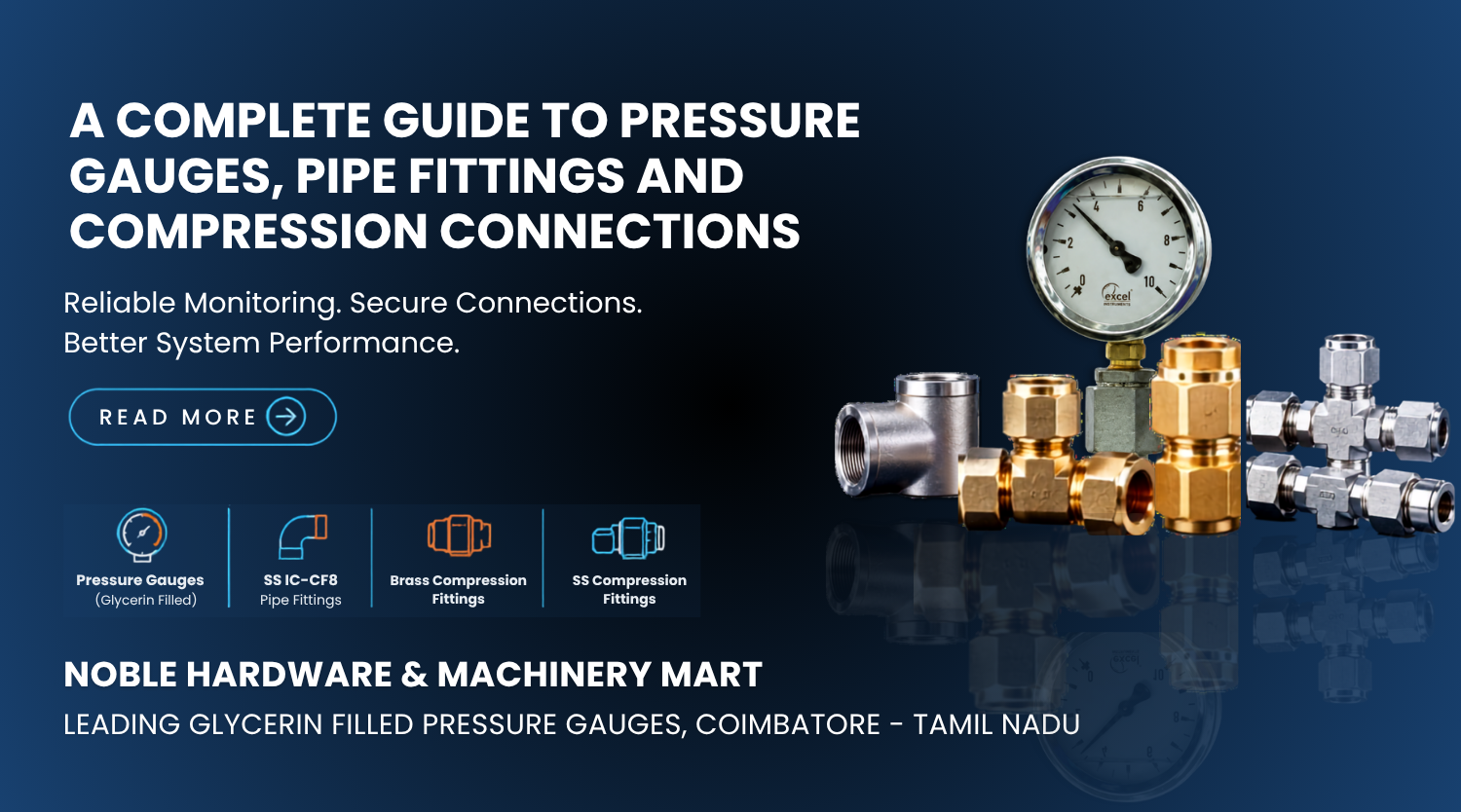
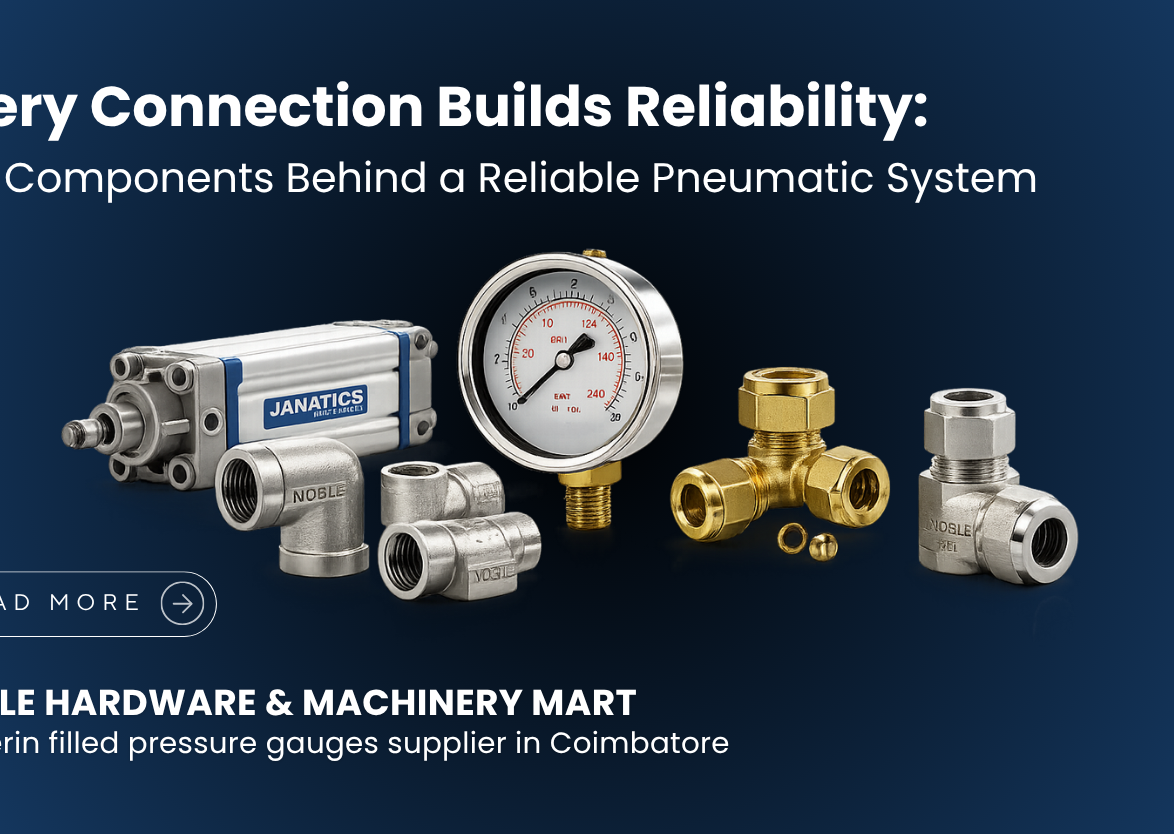
Industrial pneumatic and fluid systems may appear straightforward from the outside, but reliable performance depends on many components working together. While compressors, valves, and pneumatic cylinders often receive most of the attention, the smaller components connecting and monitoring the system are equally important.
Pressure needs to be monitored accurately. Pipes need secure connections. Tubes must be connected properly to prevent leakage and maintain consistent airflow or fluid flow. This is where pressure gauges, pipe fittings, and compression fittings become important.
A well-designed system does not depend on one component alone. Instead, each component performs a specific function that contributes to the overall reliability of the installation.
The Role of Pressure Monitoring in Industrial Systems
Pressure is one of the most important operating parameters in pneumatic and fluid systems. Maintaining the correct pressure helps equipment operate within its intended working conditions, while abnormal pressure can indicate problems such as leakage, blockage, excessive demand, or other system issues.
A pressure gauge gives operators a direct indication of the pressure within the system. This makes it easier to monitor operating conditions and identify changes that may require attention.
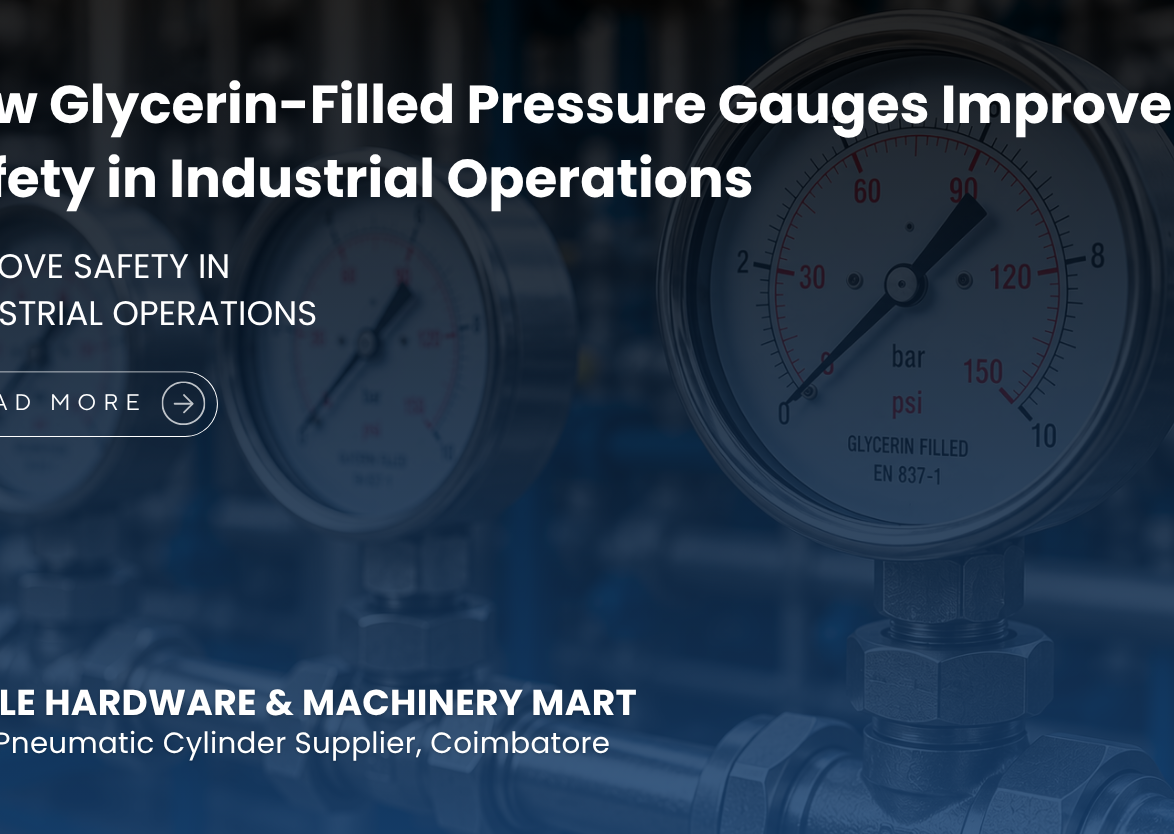
In applications where vibration and pressure pulsation are present, glycerin filled pressure gauges can be particularly useful. The glycerin inside the gauge helps dampen pointer movement caused by vibration and pulsation, making the reading easier to observe.
However, selecting a pressure gauge should involve more than simply choosing a gauge with the required pressure range. Factors such as connection size, operating temperature, vibration, media compatibility, installation conditions, and required pressure range should also be considered.
Accurate pressure monitoring provides the operator with valuable information about what is happening inside the system.
Building a Reliable Piping Network
Pneumatic systems frequently use tubes to carry compressed air between valves, regulators, cylinders, gauges, and other components. These tube connections need to remain secure during normal operation.
Even when the major components of a pneumatic system are correctly selected, poor tube connections can create performance problems. Leakage, loose connections, damaged tubing, and incorrect fitting sizes can affect pressure stability and increase maintenance requirements.
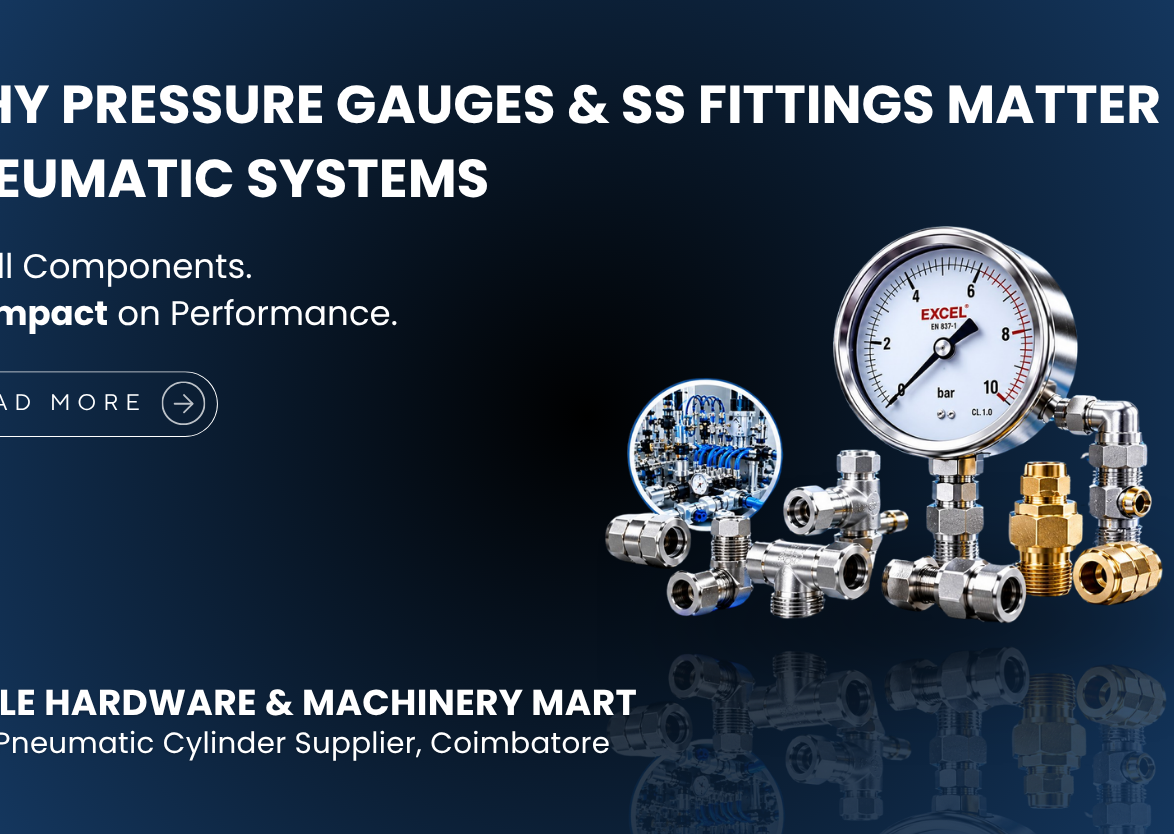
Brass compression fittings provide a practical method of connecting compatible tubes without welding. They are widely used in pneumatic and general industrial applications where brass is suitable for the operating environment.
One of their practical advantages is the ability to install, remove, inspect, and service connections without complex joining processes.
When selecting a compression fitting, the tube outside diameter, thread specification, operating pressure, temperature, media compatibility, and material requirements should be checked carefully.
Stainless Steel Compression Fittings for Demanding Applications
Not every industrial environment has the same operating conditions. Some systems may be exposed to moisture, corrosive substances, temperature variations, vibration, or other demanding conditions.
In these situations, stainless steel compression fittings may be considered when their specifications match the application.
Stainless steel offers good corrosion resistance and durability, making it a suitable material for various pneumatic, instrumentation, fluid-handling, and industrial applications.
The choice between brass and stainless steel should not simply be based on which material appears stronger or more durable. The correct choice depends on the actual application.
Pressure, temperature, media compatibility, corrosion exposure, installation environment, and maintenance requirements should all be evaluated before selecting the fitting material.
Brass and Stainless Steel: Selecting the Right Material
Both brass and stainless steel have their place in industrial systems.
Brass compression fittings can be a practical choice for many general pneumatic and industrial applications where the operating environment is compatible with brass. Stainless steel fittings may be considered where greater corrosion resistance or material durability is required.
The decision should therefore be based on application requirements rather than using the same material for every installation.
For example, a general compressed-air application in a controlled indoor environment may have different requirements from an installation exposed to moisture or corrosive conditions.
Understanding the environment before purchasing the component can help avoid unnecessary replacement and maintenance problems later.
How These Components Work Together
The real value of these components becomes clear when they are considered as part of the complete system.
A simplified pneumatic system can be represented as:
Air Compressor → Air Preparation → Pressure Regulation → Pressure Monitoring → Control Valve → Tubing → Fittings → Pneumatic Cylinder
The compressor produces compressed air. Air preparation equipment filters and regulates the air. A pressure regulator helps control the supplied pressure, while the pressure gauge allows the operator to monitor it.
From there, valves control the movement of compressed air through the system. Tubing carries the air between components, while pipe and compression fittings create the required connections.
Finally, the compressed air reaches equipment such as a pneumatic cylinder, where the air energy is converted into mechanical movement.
This illustrates an important point: the reliability of a pneumatic system depends on the interaction between its components.
A high-quality cylinder cannot compensate for an unsuitable connection. An accurate pressure gauge cannot prevent leakage caused by an incorrectly installed fitting. Similarly, good-quality fittings cannot compensate for pressure conditions outside their specified operating range.
Each component has to be appropriate for its specific role.
Preventing Leakage Through Proper Component Selection
Air leakage is one of the common concerns in compressed-air systems. Leakage can occur for several reasons, including loose connections, damaged threads, incorrect fitting sizes, worn components, improper installation, or unsuitable materials.
A connection that appears small may still affect overall system performance when leakage continues over time.
For this reason, fitting selection and installation should receive the same attention as the selection of major pneumatic equipment.
Before installation, technicians should verify the tube or pipe dimensions, connection type, pressure rating, temperature range, material compatibility, and manufacturer’s specifications.
Regular inspection can also help identify damaged or loose connections before they develop into larger maintenance problems.
Factors to Consider Before Selecting Gauges and Fittings
Choosing industrial components based only on price or appearance can lead to compatibility problems. The operating conditions should always be considered first.
Important factors include:
- Operating pressure
- Maximum pressure
- Pipe and tube size
- Thread and connection type
- Operating temperature
- Type of air, gas, or fluid
- Material compatibility
- Corrosion exposure
- Vibration
- Installation environment
- Maintenance requirements
- Manufacturer specifications
For example, a fitting used in a high-vibration environment may have different requirements from one installed in a controlled environment. Similarly, a pressure gauge used in a pulsating application may require different specifications from a gauge used under stable pressure.
Understanding these conditions makes component selection more systematic and helps reduce avoidable connection problems.
Applications Across Industrial Systems
Pressure gauges, pipe fittings, and compression fittings are used across many industrial environments, depending on their specifications.
Typical applications include:
- Pneumatic automation
- Industrial machinery
- Manufacturing equipment
- Textile machinery
- Packaging machinery
- Process equipment
- Instrumentation
- Air compressor systems
- Fluid-handling systems
- Industrial automation
Different industries may have different requirements for pressure, temperature, materials, and corrosion resistance. Therefore, components should always be selected according to the specific application.
Choosing Industrial Pneumatic Components in Coimbatore
Coimbatore has a large manufacturing and engineering ecosystem, with businesses using pneumatic components, automation products, industrial fittings, pressure gauges, and machinery components across various applications.
For businesses sourcing these products, important considerations include product specifications, material options, availability, compatibility, and supplier support.
Noble Hardware and Machinery Mart provides pneumatic and industrial components for applications involving pressure monitoring, piping connections, tubing, and pneumatic systems.
Whether the requirement involves a pressure gauge, SS pipe fitting, compression fitting, or pneumatic component, understanding the application first can help businesses select a suitable product.
Conclusion
Pressure gauges, pipe fittings, and compression fittings may be small compared with the major machinery they support, but they play an important role in maintaining reliable pneumatic and industrial systems.
A suitable pressure gauge provides visibility into system pressure. Pipe fittings create connections between sections of the piping network, while compression fittings provide practical tube connections between different components.
The best results come from treating these components as part of one complete system rather than as individual products. By considering pressure, temperature, tube and pipe dimensions, material compatibility, corrosion exposure, vibration, and installation conditions, industries can make more informed component-selection decisions.
For businesses looking for pressure gauges, SS pipe fittings, compression fittings, pneumatic fittings, and other industrial pneumatic components in Coimbatore, Noble Hardware and Machinery Mart can provide products suited to a range of industrial applications.
Frequently Asked Questions
1. What is the purpose of a pressure gauge in a pneumatic system?
A pressure gauge allows operators to monitor system pressure and identify changes that may indicate abnormal operating conditions.
2. What are compression fittings used for?
Compression fittings are used to connect compatible tubes without welding. They are commonly used in pneumatic, instrumentation, and industrial applications.
3. What is the difference between brass and stainless steel compression fittings?
The main difference is the material. Brass can be suitable for many general applications, while stainless steel may be selected when higher corrosion resistance or durability is required. The final choice depends on the application.
4. Can poor fittings cause air leakage?
Yes. Incorrect sizing, loose connections, damaged components, poor installation, or unsuitable fittings can contribute to air leakage.
5. How should an industrial pressure gauge be selected?
The operating pressure, pressure range, connection type, size, temperature, media, vibration, and installation environment should all be considered.
Leave a Comment
Your email address will not be published. Required fields are marked *