In the beverage industry, filling bottles with soda and sealing them securely are essential steps in the production process. Manufacturers need machinery that can handle these operations efficiently while maintaining a consistent workflow. Pneumatic technology plays an important role in making this possible by using compressed air to produce controlled mechanical movement.
Advance Machinery Corporation (AMC), based in Coimbatore, manufactures beverage processing and packaging machinery, including a pneumatically operated soda and soft-drink filling machine designed for glass bottles. The machine uses pneumatic cylinders to support the filling and crown-corking operations, helping the operator carry out these tasks in a defined sequence.
Although pneumatic cylinders are relatively small components within the complete machine, their movement is important to the operation of the mechanisms they control. Understanding how they work, how they interact with other pneumatic components, and how they should be maintained helps manufacturers make better decisions about equipment performance and replacement parts.
The Role of Pneumatic Cylinders in Beverage Packaging
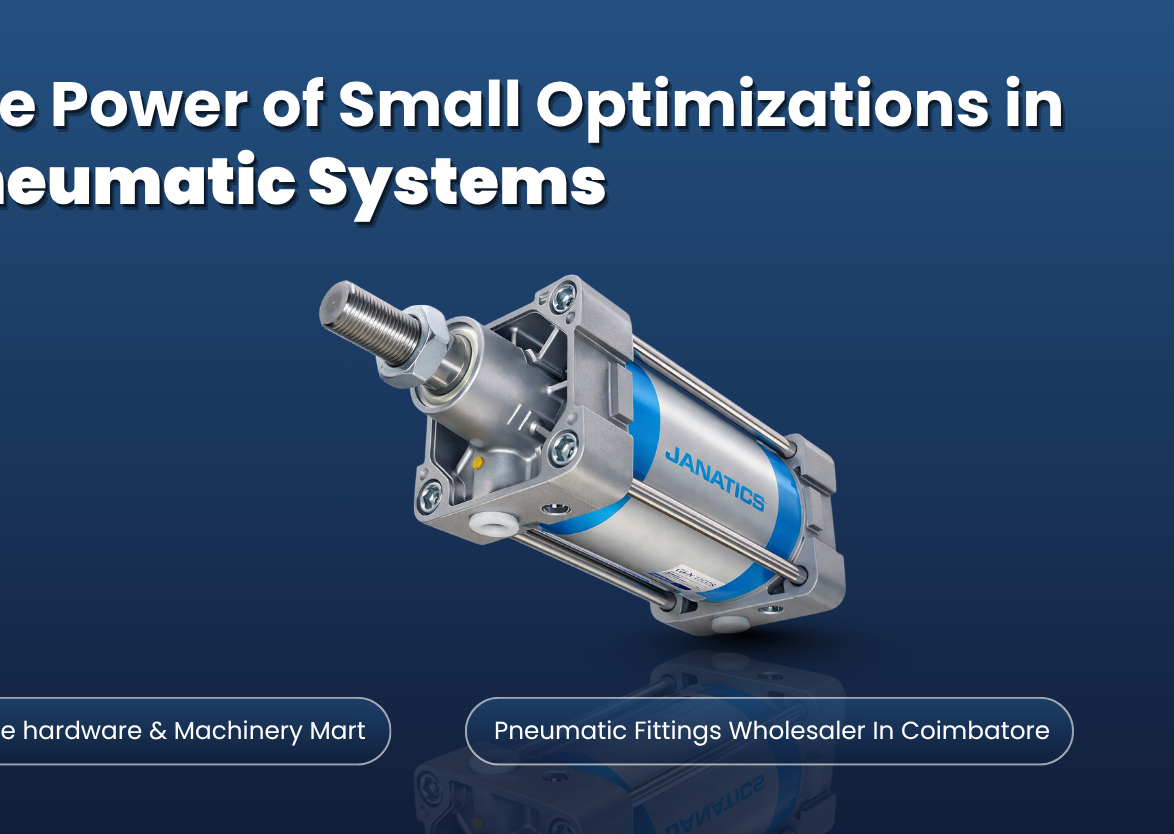
A pneumatic cylinder is a mechanical actuator that converts compressed air into linear movement. When compressed air enters the cylinder, it moves an internal piston, which transfers force through a piston rod to a connected mechanism. Depending on the cylinder design, this movement can extend, retract, lift, push, or position a machine component.
Pneumatic cylinders are commonly used in packaging machinery because many production tasks require repeated and controlled movement. They are found in filling machines, capping equipment, material-handling systems, assembly machinery, and other industrial applications.
In beverage packaging, the cylinder does not perform every operation on its own. Instead, it works with valves, tubing, fittings, and other mechanical parts to complete a specific task. The cylinder provides the movement, while the machine’s design determines how that movement contributes to the overall process.
This is the principle behind the pneumatic arrangement used in AMC’s soda and soft-drink filling machine for glass bottles.
Pneumatic Cylinder Operation in AMC’s Soda Filling Machine
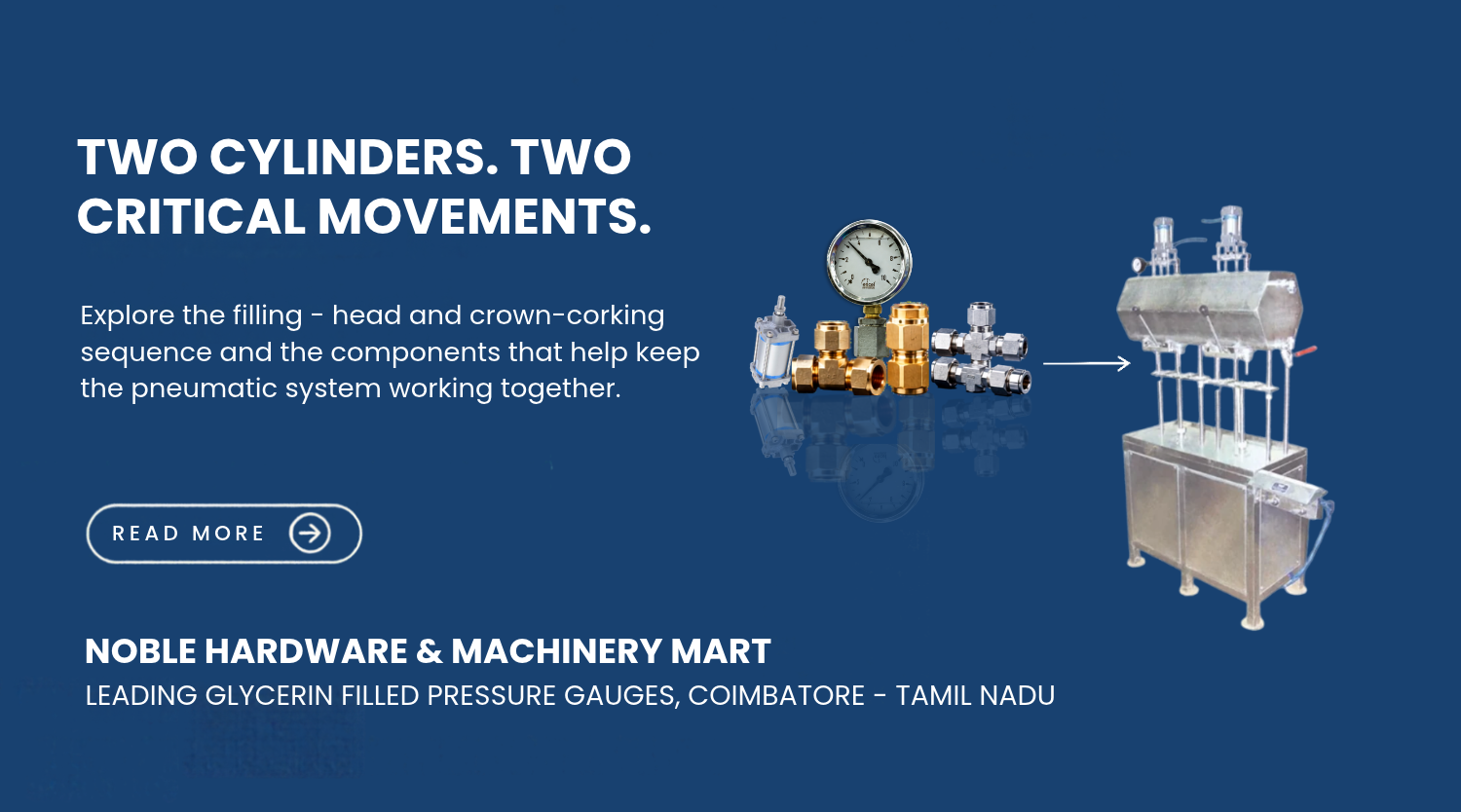
AMC’s machine uses two pneumatic cylinders for different stages of the operation. One cylinder is associated with the filling head, while the other operates the crown-corking mechanism. Together, these mechanisms support the sequence of filling a bottle and closing it with a crown cork.
The process begins when the operator positions an empty glass bottle on the machine table. The filling head is prepared according to the machine’s operating procedure, and the operator activates the filling lever. The cylinder associated with the filling head provides the movement required by that mechanism, while the filling valve controls the flow of soda into the bottle.
During filling, the valve allows air to be released as part of the machine’s filling sequence. Once the bottle has been filled, the operator releases the filling lever and activates the crown-corking lever. The second pneumatic cylinder then operates the capping mechanism, which applies the crown cork to close the bottle.
After the capping operation is complete, the operator removes the finished bottle and repeats the process with the next one.
The operating sequence can be summarized as follows:
- Bottle positioning: The empty glass bottle is placed correctly on the machine table.
- Filling preparation: The filling head is prepared and the filling operation is activated.
- Bottle filling: Soda flows through the filling valve, with the shifting valve supporting the filling sequence.
- Crown capping: The operator activates the capping lever, and the second cylinder operates the crown-corking mechanism.
- Bottle removal: The sealed bottle is removed, and the next cycle begins.
This arrangement gives the operator a clear sequence to follow. The pneumatic cylinders provide the required movement, while the filling and capping mechanisms carry out their respective functions.
Making the Filling and Capping Process More Convenient
In a production environment, repetitive manual operations can require considerable effort and time. Pneumatic cylinders help reduce the need for operators to move machine mechanisms entirely by hand. In AMC’s application, they provide movement for the filling-head and crown-corking mechanisms, supporting a more organised working process.
The separate filling and capping operations also help establish a consistent sequence. Once the operator understands the machine’s procedure, the same basic steps can be repeated for successive bottles. This is particularly useful in small and medium-scale beverage production, where practical equipment and an organised workflow are important.
AMC describes its machine as suitable for convenient operation, including operation by a single person. The operator still needs to position bottles, activate the controls, monitor the process, and handle finished products. Pneumatic operation supports these activities rather than eliminating the need for operator involvement.
The overall benefit depends on the complete machine design, the condition of its components, the availability of a suitable compressed-air supply, and the way the production process is managed. A pneumatic cylinder alone does not determine filling accuracy, sealing quality, or the total number of bottles produced.
Understanding Production Capacity and Operating Conditions
AMC’s published machine description states an approximate production capacity of 4,000 bottles during an eight-hour shift. This figure relates to the stated capacity of the machine as a whole, not to the output of an individual pneumatic cylinder.
Actual production can vary according to bottle handling, product requirements, machine setup, cleaning, maintenance, changeovers, and operator workflow. Interruptions or problems with the compressed-air supply may also affect operation.
Manufacturers planning production should therefore consider more than the published capacity figure. Bottle size, expected daily output, available working hours, product characteristics, and operating requirements should all be discussed with the machine supplier before selecting equipment.
For machine-specific details, refer to AMC’s soda and soft-drink filling machine for glass bottles page. AMC’s videos page also provides a place to explore its machinery and applications.
The Importance of Supporting Pneumatic Components
A pneumatic cylinder relies on the rest of the compressed-air system to operate correctly. Air must reach the cylinder at a suitable pressure, and the control components must direct it appropriately. Tubing and fittings must also provide secure connections throughout the system.
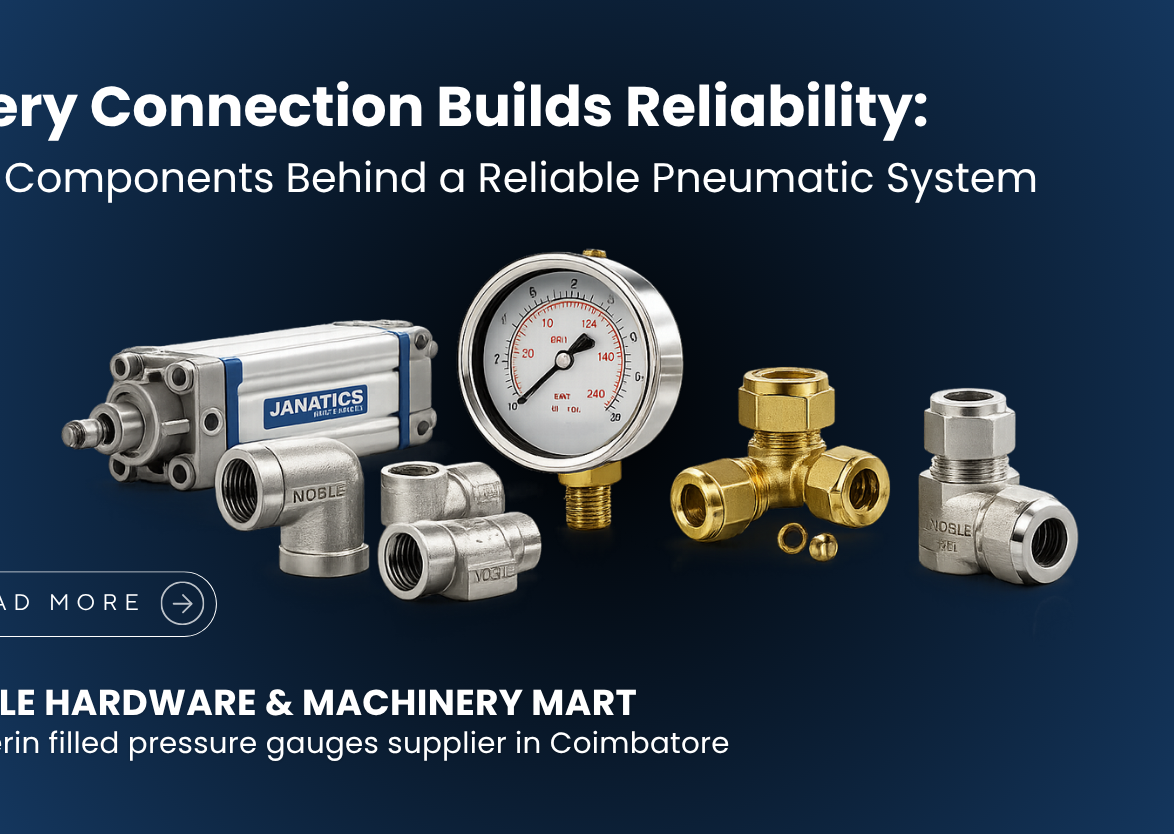
A typical pneumatic arrangement may include an air preparation unit, directional control valves, polyurethane (PU) tubing, One Touch Fittings, and pneumatic cylinders. Each component has a different function.
The air preparation unit helps condition the compressed air according to system requirements. Directional control valves regulate the flow and direction of air, allowing the cylinder to extend or retract. PU tubing carries the air between components, while One Touch Fittings connect compatible tubing to valves, cylinders, and other pneumatic equipment.
When these components are correctly selected and maintained, they help the pneumatic system operate as intended. However, a problem in one part of the system can affect the performance of another.
For example, a cylinder that moves slowly may not necessarily be faulty. Low air pressure, leaking fittings, a malfunctioning control valve, restricted tubing, worn seals, or a mechanical obstruction could all contribute to the problem. Inspecting the complete system helps identify the underlying cause before replacement parts are purchased.
Maintaining Pneumatic Cylinders for Consistent Operation
Regular maintenance is important for beverage packaging machinery because pneumatic components are used repeatedly during production. Identifying wear, leakage, or irregular movement early can help reduce avoidable interruptions.
Operators and maintenance personnel should follow the equipment manufacturer’s instructions and pay attention to changes in cylinder performance. Common checks include:
- Air leakage: Inspect tubing, fittings, valves, and cylinder connections for signs of escaping air.
- Movement and response: Watch for slow, jerky, incomplete, or inconsistent cylinder movement.
- Seals and connections: Look for visible damage, leakage, worn seals, or loose connections.
- Operating pressure: Ensure the system operates within the pressure range specified by the machine and component manufacturers.
- Air preparation: Maintain the air preparation unit according to the required filtration and air-quality specifications.
- Mechanical alignment: Check the cylinder mounting and connected mechanism for misalignment, obstruction, or excessive resistance.
Maintenance should never involve working on a pressurised system without following the correct safety procedure. Before inspecting or replacing pneumatic components, trained personnel should isolate the air supply and release stored pressure as instructed by the manufacturer.
It is also important not to increase the operating pressure beyond specified limits simply to compensate for slow movement. The cause of the problem should be identified first, as excessive pressure may damage components or create unsafe operating conditions.
Selecting the Right Pneumatic Cylinder for Replacement
When a pneumatic cylinder wears out or becomes unsuitable for continued operation, choosing the correct replacement is essential. A cylinder that looks similar to the original may still differ in dimensions, mounting arrangement, pressure rating, or operating characteristics.
The existing cylinder’s model number and machine documentation are useful starting points. If these are unavailable, the required specifications should be confirmed with the machinery manufacturer or a qualified pneumatic supplier before an order is placed.
The main selection considerations include:
- Bore size: The internal diameter of the cylinder, which affects the force available at a given air pressure.
- Stroke length: The distance the piston rod needs to travel to operate the connected mechanism.
- Mounting arrangement: The mounting type and dimensions required for correct installation.
- Operating pressure: The pressure range supported by the cylinder and the existing machine.
- Port and connection details: The connections needed to integrate the cylinder into the pneumatic system.
- Application requirements: The load, movement, operating frequency, and environmental conditions involved.
Compatibility with the complete pneumatic system is just as important as the cylinder itself. The directional control valve, tubing, fittings, and air preparation components must suit the application and the machine’s requirements.
For a beverage filling machine, replacement decisions should be based on the original equipment specifications rather than assumptions about standard cylinder sizes. Consulting the manufacturer helps avoid unnecessary modifications and reduces the risk of selecting an unsuitable component.
Sourcing Pneumatic Components for Industrial Applications
Industrial machinery depends on suitable components working together. Businesses maintaining filling machines and other production equipment may need pneumatic cylinders, directional control valves, air preparation units, PU tubing, and compatible fittings for maintenance or replacement.
Noble Hardware & Machinery Mart supplies pneumatic components for industrial applications. Its range includes industrial pneumatic cylinders, which can be explored when identifying components for a suitable application.
Before purchasing a replacement cylinder, it is useful to provide the supplier with the existing model number, bore size, stroke length, mounting details, operating pressure, and application requirements. Sharing accurate specifications makes it easier to assess compatibility and identify a suitable component.
For components used in a specific machine, the original equipment manufacturer’s recommendations should remain the primary reference. In the case of AMC’s soda filling and crown-corking machine, AMC is the appropriate source for machine-specific operating procedures and specifications.
Businesses can also visit the Noble Mart website to explore its industrial product range.
Conclusion
Pneumatic cylinders are important components in beverage packaging machinery because they convert compressed air into controlled mechanical movement. In AMC’s soda and soft-drink filling machine for glass bottles, one cylinder supports the filling-head mechanism while another operates the crown-corking mechanism.
By supporting these two stages, the cylinders contribute to an organised filling and capping workflow. Their performance, however, depends on the complete machine, including its valves, air supply, tubing, fittings, mechanical arrangement, and operating procedure.
For manufacturers and maintenance teams, understanding how these components work together makes it easier to identify performance problems, carry out appropriate maintenance, and choose compatible replacement parts. Correct specifications, regular inspection, and adherence to the manufacturer’s instructions help support reliable operation over time.
Note: The machine arrangement and approximate production capacity discussed in this article should be checked against AMC’s current published specifications before publication. The stated capacity refers to the complete machine and should not be attributed to the pneumatic cylinders alone.
Frequently Asked Questions
- What is the role of pneumatic cylinders in a soda filling machine?
Pneumatic cylinders convert compressed air into mechanical movement. In AMC’s soda filling machine, one cylinder operates the filling-head mechanism, while the second operates the crown-corking mechanism.
- How do two pneumatic cylinders work in a soda filling and capping machine?
The first pneumatic cylinder supports the movement of the filling head during the bottle-filling operation. After filling, the second cylinder operates the crown-corking mechanism to seal the bottle. Both work in a defined sequence.
- What pneumatic components are used along with pneumatic cylinders?
A typical pneumatic system includes:
- Air preparation units
- Directional control valves
- PU tubing
- One Touch Fittings
- Pneumatic cylinders
These components work together to control compressed-air flow and cylinder movement.
- Why does a pneumatic cylinder move slowly or inconsistently?
Slow or irregular cylinder movement can occur due to low air pressure, air leakage, faulty control valves, restricted tubing, worn seals, or mechanical obstruction. Inspecting the complete pneumatic system helps identify the actual problem.
- How do you select the correct pneumatic cylinder for an industrial machine?
Before selecting a replacement cylinder, check the following specifications:
- Bore size
- Stroke length
- Mounting arrangement
- Operating pressure
- Port and connection details
- Application requirements
Always verify compatibility with the existing machine and consult the machinery manufacturer or a qualified pneumatic supplier.